A life spent
becoming ready
Every chapter of Kris's life — including the hard ones — was preparing her for the students who would one day walk through her door.
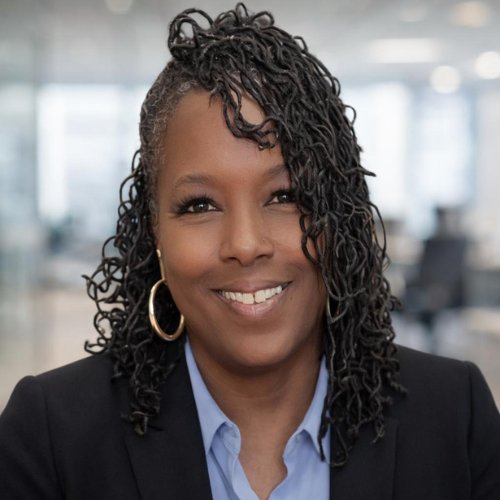
Kris grew up in Hartford, Connecticut — a child of post-migration Black America. Like many from families who had made the Great Migration north, she grew up surrounded by cousins and extended family. The circumstances of poverty were real, but the density of community made them feel less harsh. That early lesson — that people make the difference — never left her.
Kris began her college education in Virginia. She was not retained. The preparation simply was not there — not because of a lack of ability, but because of a system that sent students like her into colleges it had never truly designed for them.
She went back home. She worked for a year. And then she made a decision that changed everything.
The Air Force was the catalyst to change. Military service gave Kris structure, travel, discipline, and skills she couldn't have found anywhere else. She was assigned to medical units, where she developed deep expertise in patient care and ophthalmic surgery — eventually becoming adept in ophthalmology, assisting in surgical procedures, and training physicians on emerging medical technologies.
It was in those operating rooms that a thought crystallized: If I can train a doctor, I can become one.
Kris returned to college as a pre-med student. Then she took an elective: Constitutional Law. She was bitten by the legal bug. Acceptance letters arrived for both medical school and law school. She chose the law — not for the courtroom, but for the voice. There was something about using her voice to help her people that called to her in a way medicine couldn't match.
While in law school she also earned her Master's degree in African and African American Studies. The legal training and the historical and cultural scholarship were always two sides of the same coin.
She left law school with her J.D. But something was still missing.
She went back and acquired an MBA. At the time, it seemed like one degree too many — even to her. But looking back, every credential was a chapter in a preparation she didn't yet fully understand. The J.D. gave her the voice. The MBA gave her the strategy. The MA gave her the community foundation. The military gave her the discipline. Each experience walked her through the very struggles her students would one day face.
"Each of my experiences took me through the experiences of all the students I encounter. Like the kids of this generation say — I was made for this."
For fifteen years, Kris worked as a college instructor and advisor at The Ohio State University — one of the largest universities in the country. She watched students arrive brilliant, capable, and utterly unprepared for what the institution was about to ask of them culturally, psychologically, and socially. She became the person on campus who could relate to their experience and normalize it. Just like the person who had once done that for her.
She built frameworks. She guided students. She learned what worked and what the institution could never provide on its own.
After fifteen years watching students arrive brilliant and capable but unprepared for what the institution would ask of them, Kris knew exactly what needed to exist. She had lived the gap herself, decades earlier. She had spent her entire career studying it up close. And she had spent her entire life preparing to build the thing that would close it.
NEP opened its doors. Not as a reaction. As a fulfillment.